By Dawn Cagliano, President, IVCi
For years, the AV integration industry has tended to equate size with capability.
When responding to RFPs, competing for enterprise accounts, or presenting to prospective clients, conversations often gravitate toward technician counts, office locations, fleet sizes, and organizational scale. The assumption is that bigger automatically means better.
In my experience, that assumption misses what many clients are actually looking for.
Customers don’t buy headcount. They buy confidence.
They want confidence that their partner understands the project, can execute on schedule, will respond when challenges arise, and will remain accountable long after the installation is complete.
I was reminded of this several years ago while pursuing what was, at the time, the largest new construction opportunity our company had ever competed for.
We were up against several organizations that were substantially larger than we were. They had more offices, larger teams, and greater name recognition in the marketplace.
I knew the customer would eventually ask about scale, so I addressed the issue before it became an objection.
I told them, “My competitors are going to tell you they have hundreds more technicians than we do. That’s true. But we have reviewed this project extensively. We understand the scope, the schedule, and the resource requirements. Based on your construction timeline, you’re not going to need hundreds of technicians. You’re going to need the right eight.”
The conversation changed immediately.
Instead of discussing organizational size, we began discussing project execution. Instead of talking about how many people were on payroll, we talked about which specific people would be responsible for delivering the work.
Our engineers could speak to the design. Our project managers understood the schedule. Our technical experts knew the challenges. Our leadership was engaged and accountable.
The client wasn’t buying capacity. They were buying confidence in the team sitting across the table.
We ultimately won the project.
It was not because we were the largest company competing for the work, but because we demonstrated a clear understanding of what it would take to deliver successfully.
That experience reinforced something I believe is increasingly important in today’s integration landscape.
Scale matters.
Complex enterprise clients require financial stability, operational maturity, geographic reach, and the ability to support large deployments. Those capabilities are important and should not be minimized.
At the same time, scale alone does not create a better customer experience.
Many organizations become so focused on growth that they unintentionally create distance between customers and the people responsible for delivering results. Layers of management are added. Decisions take longer. Accountability becomes less visible.
Customers notice.
What clients consistently value is access to knowledgeable people, responsiveness when issues arise, and confidence that someone owns the outcome. That is particularly important in our industry.
The environments we design and support are no longer simply collections of technology. They are mission-critical spaces where organizations communicate, collaborate, teach, make decisions, and serve their customers.
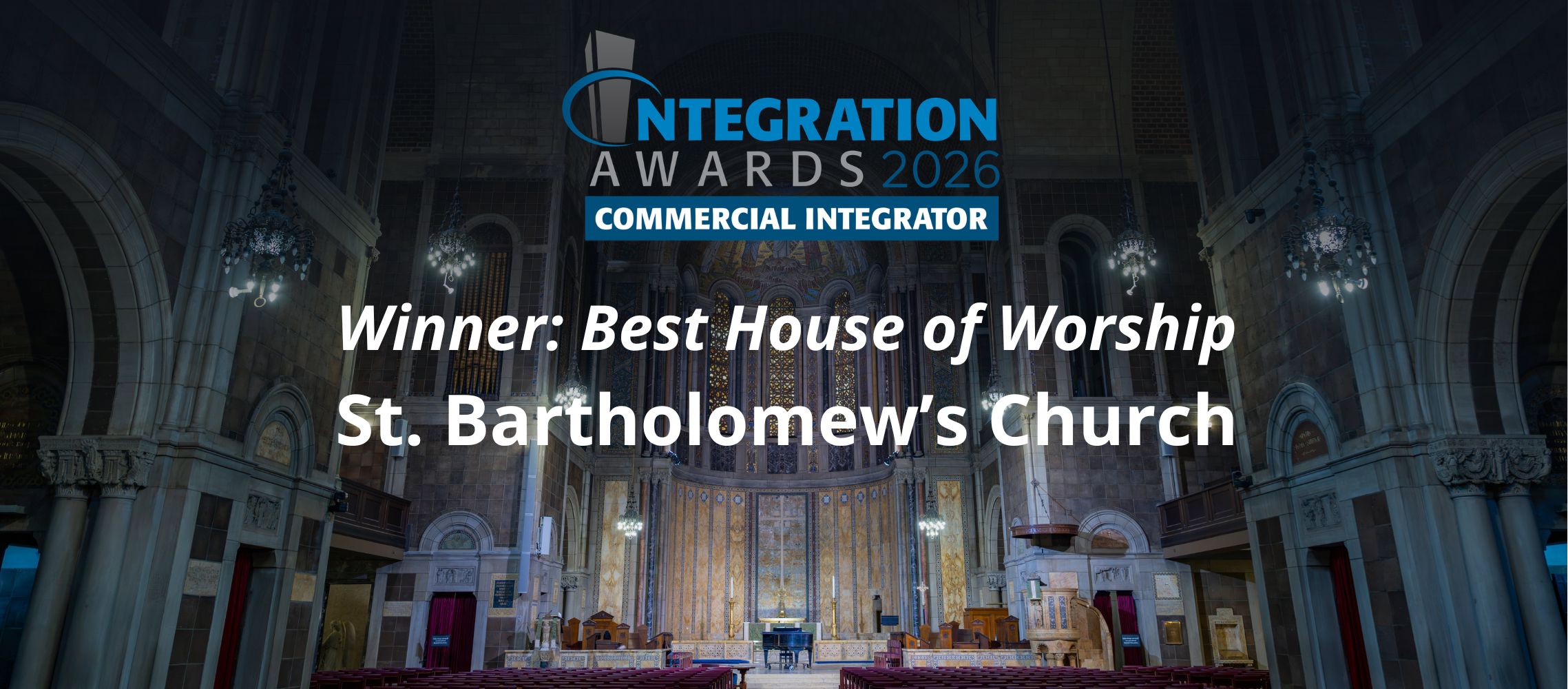
Whether it’s a corporate headquarters, healthcare facility, higher education campus, operations center, or house of worship, technology has become deeply intertwined with organizational performance. The responsibility of the integrator extends well beyond installation. Success is measured by what happens after go-live.
How quickly are issues resolved?
How effectively is the environment supported?
How responsive is the partner when priorities change?
How well does the relationship endure over time?
These are the questions that ultimately determine customer loyalty.
At IVCi, our mission is “creating spaces that connect people”. Achieving that requires more than technical expertise. It requires a culture of ownership, responsiveness, and long-term commitment. It’s why many of our client relationships span years and often decades.
It’s also why our company slogan, “Large Enough to Serve, Small Enough to Care,” continues to resonate. For more than 30 years, that philosophy has shaped how we approach our clients, our projects, and our business.
Large Enough to Serve, Small Enough to Care.
To me, that phrase isn’t about size. It’s about balance.
It means having the resources, expertise, and operational discipline necessary to support complex client environments while maintaining the accessibility, accountability, and personal investment that clients deserve.
The most successful integrators of the future will not necessarily be the largest. They will be the organizations that successfully combine scale with service, capability with accountability, and growth with genuine customer care.
Clients should ask about size, resources, and support capabilities. Those things matter.
But they should also ask whether they’re working with a company that will remain invested when the project is over.
Will the people who earned your trust during the sales process still care about your success years after the installation is complete?
To me, that’s what “Large Enough to Serve, Small Enough to Care” really means: having the capability to take on complex challenges while remaining personally invested in the people and relationships behind them.