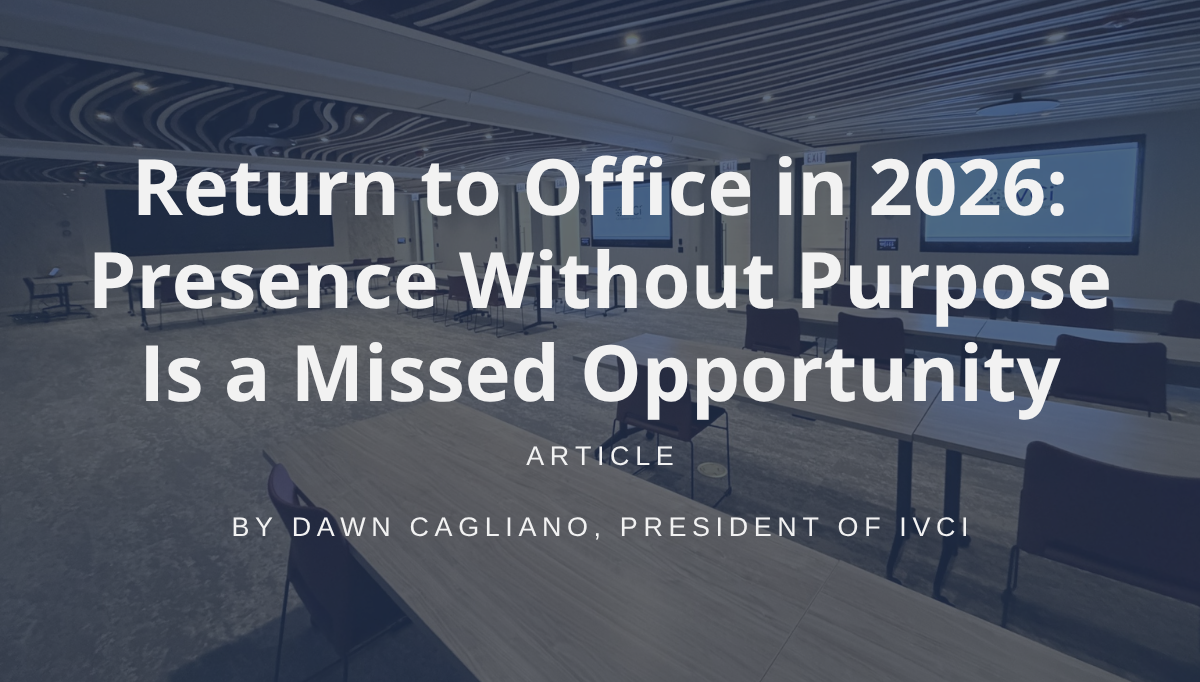
In 2026, return-to-office mandates have become common. Many organizations have moved past debating whether employees should come back and are now focused on how often. But far fewer are asking the more important question:
What are we asking people to come back to?
Requiring physical presence without rethinking the purpose of the workplace is a shortsighted strategy. Employees don’t resist the office themselves; they resist commuting to a space that feels transactional, isolating, or no better than their home setup. If the office is simply rows of desks and back-to-back video calls, we’ve missed the point entirely.
I’ve participated in return-to-office discussions where plans fit neatly on a single slide: X days per week, compliance language, attendance metrics—and not one word addressed how being together would make people better, stronger, or more connected. That gap matters more than most leaders want to admit. The responsibility now falls squarely on employers.
The Office Is No Longer About Attendance, It’s About Connection
Work can happen anywhere. That genie isn’t going back in the bottle. The value of the office in 2026 isn’t productivity alone; it’s connection, collaboration, culture, and belonging. When people come together in person, it should be intentional. It should create moments that can’t be replicated through a screen: spontaneous problem-solving, mentorship, trustbuilding, creativity, and shared wins. These are the things that sustain teams over time, especially in complex, fast-moving organizations. If employees feel more connected to colleagues they’ve never met in person than to the people sitting two desks away, leadership needs to pause and reflect. Culture does not magically reappear because a badge is scanned at the door.
This is where leadership must be clear: it is the employer’s responsibility to create spaces that connect people. If we are asking employees to show up in person, the environment must earn that presence—socially, culturally, and functionally.
Employers Must Design for Humans, Not Headcount
Return-to-office mandates without investment send a clear and damaging message: we care about control more than experience. Creating a workplace that actually connects people requires deliberate design across multiple dimensions:
- Space must support collaboration, not just occupancy. When environments don’t invite interaction, people retreat to their headphones and screens.
- Technology matters more than many leaders realize. When meeting rooms are filled with tools that technically work but don’t work well—poor audio, cameras that don’t capture the room, interfaces no one wants to touch—people disengage instead of collaborating.
- Purpose must be clear. Teams should understand why they are together in person, whether for planning, innovation, onboarding, training, or relationship-building. If the answer is “because leadership said so,” engagement will erode quickly.
- Leadership presence matters. Culture is reinforced by behavior, not policy or floor plans.
The Real Opportunity of 2026
This moment is not about reversing remote work. It’s about redefining work altogether. The organizations that will thrive are those that treat the office as a strategic asset, not a compliance mechanism—a place that strengthens teams, accelerates learning, and reinforces shared purpose.
Return-to-office is not a facilities decision. It’s not an HR checkbox. It’s a leadership challenge. The leaders who get it right won’t just fill seats, they’ll build connection, commitment, and cultures people truly want to be part of.
About IVCi
IVCi helps organizations reimagine the modern workplace through intelligent audiovisual design and collaboration technology. From hybrid meeting rooms to experience-driven workspaces, we integrate solutions in spaces to connect people—wherever they work. As employers redefine the purpose of the office in 2026, IVCi enables teams to create environments that inspire collaboration, strengthen culture, and make every in-person moment count. Learn more at ivci.com.
This article was originally published in the February 2026 issue of the HIA-LI Biz Now newsletter.