As sustainability and cost-efficiency are becoming a priority, smart facilities are making their way to the forefront of technological upgrades to audiovisual and smart equipment. These systems help create data-driven, predictable, and automated systems that help businesses not only save money but improve occupant experience, reduce energy consumption, and make facility management more efficient.
Current Challenges in Facility Management
Aside from the day-to-day operations, facility managers have to face a variety of challenges:
1. Energy Consumption and Waste
Many buildings are on automated schedules, which could lead to unnecessary cooling, heating, or overlighting spaces when they are not being used. According to the U.S. Environmental Protection Agency, approximately 30% of the energy consumed in commercial buildings is wasted.
2. Siloed Systems:
It can be difficult to understand the broader picture of operations if each system runs on its own. Smart facilities will allow all systems to work under one operational dashboard. The U.S. Energy Information Administration states that across all building types, electricity accounts for the lion’s share of energy use in commercial buildings at 61%.
3. Sustainability Goals
The push to reduce carbon footprints and ensure proper energy levels has become a necessary step for underprepared buildings to change. Smart facilities support the United Nations’ Sustainable Development Goals through the integration of digital technologies and sustainable practices into facilities, which promote climate action and economic growth.
What Technology Can Be Used in a Smart Facility?
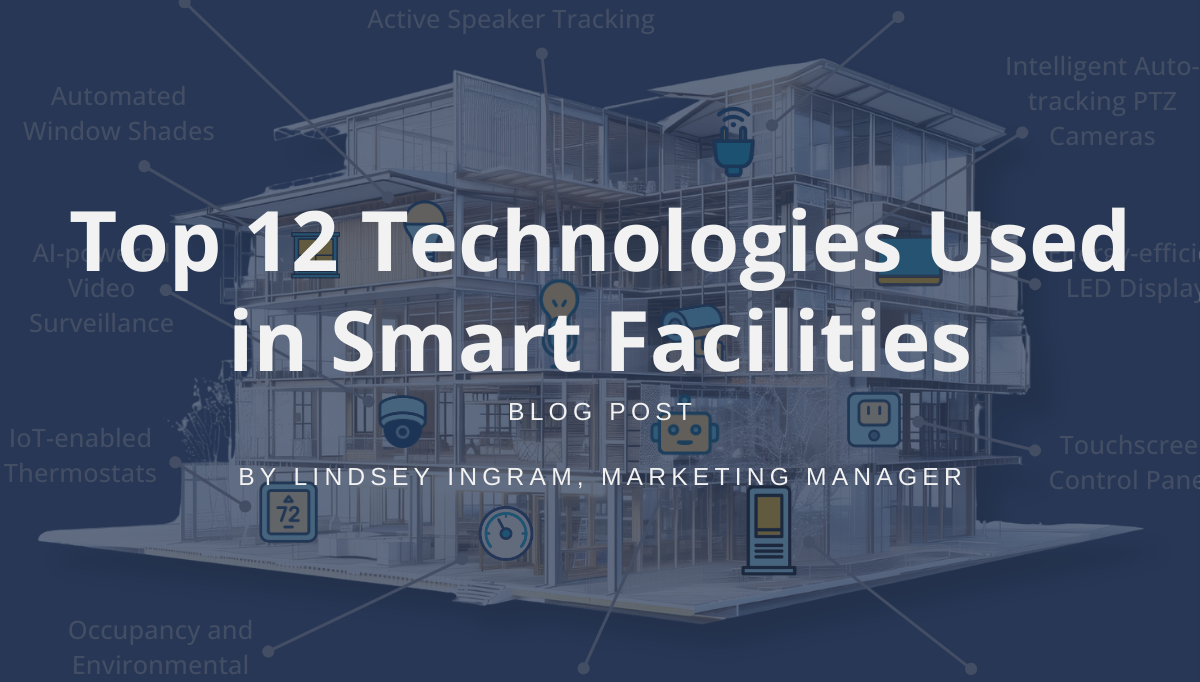
Smart facilities can be made up of several components to monitor, analyze, and adjust data in real time. Some of these technologies include:
- Automated lighting – Lighting solutions that adjust brightness and scheduling automatically.
- Automated window shades – Motorized shades that open or close on their own in response to predetermined factors.
- Smart microphones with active speaker tracking – Microphones that automatically detect the person speaking to capture clear audio.
- Predictive maintenance systems – Systems that use real-time data to anticipate equipment failures before they happen.
- Intelligent Auto-tracking PTZ cameras – Cameras that automatically track subjects without manual control.
- Energy-efficient LED displays – Low-power digital screens designed to deliver high-quality images with minimal energy use.
- Touchscreen control panels – Interactive panels that let users manage room systems through an easy and user-friendly interface.
- Digital wayfinding displays – Digital signage that provides maps and directions to help navigate spaces.
- Autonomous service robots – Self-navigating robots that perform repetitive tasks such as delivery or cleaning.
- Occupancy and environmental sensors – Devices that monitor building conditions to optimize performance.
- IoT-enabled thermostats – Internet-connected thermostats that adjust climate settings for energy efficiency.
- AI-powered video surveillance – Systems that use artificial intelligence to detect suspicious activity, recognize patterns, and enhance security 24/7.
Benefits of Smart Facilities
1. Energy & Operational Efficiency, Cost Savings, and Productivity
Smart buildings can significantly reduce energy consumption. By understanding real-time data of the facility, managers can make decisions based on energy use to adjust sustainability goals. With automated building operations, facility managers can spend less time on day-to-day tasks and more on strategic improvements to processes and the facility itself. Studies show that integrated smart systems typically deliver 15-30% reduction in energy costs within the first year of implementation, with additional savings through reduced maintenance and operational expenses.
2. Predictive Maintenance
With real-time monitoring and AI-driven analytics, smart facilities can detect signs of equipment degradation before failure, helping to schedule maintenance more strategically. This strategy increases operational efficiency and sustainability.
3. Space Optimization
By understanding how spaces are used, companies can optimize space utilization, which is important in creating or implementing hybrid work environments and back-to-office initiatives. Effective space management can lead to reduced overhead costs by ensuring that every square meter is used efficiently.
Smart technology is quickly becoming mainstream and critical to facility operations. With the benefits of energy reduction, cost savings, and operational efficiency, companies are making the switch from standard management to smart technology. IVCi can help you make the switch today – our team is here to guide you on the best technology for your facility, provide training, and technical support.
Contact us today to talk to one of our experts about your facility needs.